My School
SCHOOL

A school is an educational institution designed to provide learning spaces and learning environments for the teaching of students under the direction of teachers. Most countries have systems of formal education, which is sometimes compulsory. In these systems, students progress through a series of schools. The names for these schools vary by country (discussed in the Regional terms section below) but generally include primary school for young children and secondary school for teenagers who have completed primary education. An institution where higher education is taught is commonly called a university college or university.
In addition to these core schools, students in a given country may also attend schools before and after primary (elementary in the U.S.) and secondary (middle school in the U.S.) education. Kindergarten or preschool provide some schooling to very young children (typically ages 3–5). University, vocational school, college or seminary may be available after secondary school. A school may be dedicated to one particular field, such as a school of economics or dance. Alternative schools may provide nontraditional curriculum and methods.
Non-government schools, also known as private schools, may be required when the government does not supply adequate or specific educational needs. Other private schools can also be religious, such as Christian schools, gurukula (Hindu schools), madrasa (Arabic schools), hawzas (Shi'i Muslim schools), yeshivas (Jewish schools), and others; or schools that have a higher standard of education or seek to foster other personal achievements. Schools for adults include institutions of corporate training, military education and training and business schools.
Critics of school often accuse the school system of failing to adequately prepare students for their future lives, of encouraging certain temperaments while inhibiting others, of prescribing students exactly what to do, how, when, where and with whom, which would suppress creativity, and of using extrinsic measures such as grades and homework, which would inhibit children's natural curiosity and desire to learn.
In homeschooling and distance education, teaching and learning take place independent from the institution of school or in a virtual school outside a traditional school building, respectively. Schools are organized in several different organizational models, including departmental, small learning communities, academies, integrated, and schools-within-a-school.

The concept of grouping students together in a centralized location for learning has existed since Classical antiquity. Formal schools have existed at least since ancient Greece (see Academy), ancient Rome (see Education in Ancient Rome) ancient India (see Gurukul), and ancient China (see History of education in China). The Byzantine Empire had an established schooling system beginning at the primary level. According to Traditions and Encounters, the founding of the primary education system began in 425 AD and "... military personnel usually had at least a primary education ...". The sometimes efficient and often large government of the Empire meant that educated citizens were a must. Although Byzantium lost much of the grandeur of Roman culture and extravagance in the process of surviving, the Empire emphasized efficiency in its war manuals. The Byzantine education system continued until the empire's collapse in 1453 AD.
In Western Europe, a considerable number of cathedral schools were founded during the Early Middle Ages in order to teach future clergy and administrators, with the oldest still existing, and continuously operated, cathedral schools being The King's School, Canterbury (established 597 CE), King's School, Rochester (established 604 CE), St Peter's School, York (established 627 CE) and Thetford Grammar School (established 631 CE). Beginning in the 5th century CE, monastic schools were also established throughout Western Europe, teaching religious and secular subjects.

In Europe, universities emerged during the 12th century; here, scholasticism was an important tool, and the academicians were called schoolmen. During the Middle Ages and much of the Early Modern period, the main purpose of schools (as opposed to universities) was to teach the Latin language. This led to the term grammar school, which in the United States informally refers to a primary school, but in the United Kingdom means a school that selects entrants based on ability or aptitude. The school curriculum has gradually broadened to include literacy in the vernacular language and technical, artistic, scientific, and practical subjects.
Obligatory school attendance became common in parts of Europe during the 18th century. In Denmark-Norway, this was introduced as early as in 1739–1741, the primary end being to increase the literacy of the almue, i.e., the "regular people". Many of the earlier public schools in the United States and elsewhere were one-room schools where a single teacher taught seven grades of boys and girls in the same classroom. Beginning in the 1920s, one-room schools were consolidated into multiple classroom facilities with transportation increasingly provided by kid hacks and school buses.
Islam was another culture that developed a school system in the modern sense of the word. Emphasis was put on knowledge, which required a systematic way of teaching and spreading knowledge and purpose-built structures. At first, mosques combined religious performance and learning activities. However, by the 9th century, the madrassa was introduced, a school that was built independently from the mosque, such as al-Qarawiyyin, founded in 859 CE. They were also the first to make the Madrassa system a public domain under Caliph's control.
Under the Ottomans, the towns of Bursa and Edirne became the main centers of learning. The Ottoman system of Külliye, a building complex containing a mosque, a hospital, madrassa, and public kitchen and dining areas, revolutionized the education system, making learning accessible to a broader public through its free meals, health care, and sometimes free accommodation.

India
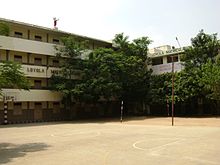
In ancient India, schools were in the form of Gurukuls. Gurukuls were traditional Hindu residential learning schools, typically the teacher's house or a monastery. Schools today are commonly known by the Sanskrit terms Vidyashram, Vidyalayam, Vidya Mandir, Vidya Bhavan in India. In southern languages, it is known as Pallikoodam or PaadaSaalai. During the Mughal rule, Madrasahs were introduced in India to educate the children of Muslim parents. British records show that indigenous education was widespread in the 18th century, with a school for every temple, mosque, or village in most regions. The subjects taught included Reading, Writing, Arithmetic, Theology, Law, Astronomy, Metaphysics, Ethics, Medical Science, and Religion.
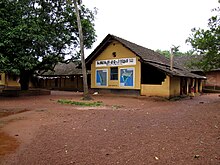
Under British rule, Christian missionaries from England, the United States, and other countries established missionary and boarding schools in India. Later as these schools gained popularity, more were started, and some gained prestige. These schools marked the beginning of modern schooling in India. The syllabus and calendar they followed became the benchmark for schools in modern India. Today most schools follow the missionary school model for tutoring, subject/syllabus, and governance, with minor changes.
Schools in India range from large campuses with thousands of students and hefty fees to schools where children are taught under a tree with a small / no campus and are free of cost. There are various boards of schools in India, namely Central Board for Secondary Education (CBSE), Council for the Indian School Certificate Examinations (CISCE), Madrasa Boards of various states, Matriculation Boards of various states, State Boards of various boards, Anglo Indian Board, among others. Today's typical syllabus includes language(s), mathematics, science – physics, chemistry, biology, geography, history, general knowledge, and information technology/computer science. Extracurricular activities include physical education/sports and cultural activities like music, choreography, painting, and theatre/drama.

Student life is meant to help us learn discipline and study. Despite that, life is quite enjoyable. The struggle is low in student life. One must get up early in the morning to get ready for school or college.
Similarly, rushing to the bus stop is very exciting during student life. The mothers constantly remind us to hurry up and not be late. It is no less than a mantra for all mothers.
In addition, there are other exciting moments in student life. We sometimes forget to complete our homework and then pretend to find the notebook when the teacher asks for it.
With the examination time around the corner, the fun stops for a while but not long. One of the most exciting things about student life is getting to go on picnics and trips with your friends.
You get to enjoy yourself and have a lot of fun. Even waiting for the exam result with friends becomes fun. The essence of student life lies in the little things like getting curious about your friend’s marks, getting jealous if they score more, and so on.
The excitement for games period or learning about a new teacher. While student life teaches us discipline, it also gives us a lot of fun. It is a memorable time in everyone’s life.
Importance of Student Life
Student life is a vital part of everyone’s life. The future of the students and the country depends on how we are as students. Thus, getting the right guidance is essential. Student life builds the foundation for our life.
Thus, if your foundation is strong, the building will be a strong one too. However, a weak foundation cannot make a building stand. In other words, student life helps us embrace human qualities.
People don’t realize how lucky and privileged one is to even get a student life. Many children dream of having it but never get one. Thus, if one gets to attain education, one must make the most of it.
Student life won’t always be filled with happiness but it will be worthwhile. It helps us grow in the path of life and acquire qualities such as honesty, patience, perseverance, and more.

Why I Love My School?
From kindergarten through primary and secondary school, and subsequently, to faculty, school is a place where we always study, grow, and establish ourselves, socialize, be a friend, help others, and love and be loved. School is a buddy that will accompany us from the beginning of our youth till the conclusion of our lives. At school, we share all of our pleasures and sorrows, and we constantly rely on one another. This is made possible through the friendships we share. They assist us in effortlessly overcoming difficulties, sharing moments of enjoyment together, and looking forward to new paths.
My school strikes the perfect balance between modern education and vintage architecture. The vintage buildings of my school never fail to mesmerize me with their glorious beauty. However, their vintage architecture does not mean it is outdated, as it is well-equipped with all the contemporary gadgets. I see my school as a lighthouse of education bestowing knowledge as well as ethical conduct upon us.
Teachers have the power to make or break a school. The teaching staff is regarded as the foundation of any educational society. It is their efforts to help kids learn and understand things that instil good habits and values in their students. While some concepts are simple to grasp, others necessitate the use of a skilled teacher to drive the home the idea with each pupil.
In contrast to other schools, my school does not solely focus on academic performance. In other words, it emphasizes on the overall development of their students. Along with our academics, extra-curricular activities are also organized at our school. This is one of the main reasons why I love my school as it does not measure everyone on the same scale. Our hardworking staff gives time to each child to grow at their own pace which instils confidence in them. My school has all the facilities of a library, computer room, playground, basketball court and more, to ensure we have it all at our disposal.
For me, my school is more than simply an educational institution; it is also my second family, which I established during my childhood. A family of wonderful friends, outstanding teachers, and fond school memories. I adore my school because it is where I learn how to be a good citizen and how to reach my goals. School is the only place where we make friends without judging them. We feel comfortable spending time with those close friends no matter what the situation.
.jpg)

https://www.protechstart.com/
ReplyDeleteclick and learn IT SKILL